

Do failing pipeline welds keep you awake at night? Poor pipe quality drains your project budget. Let us fix this problem by understanding the core manufacturing elements today. You must control several main factors affecting the quality of high frequency welded pipe. These include weld gap size, welding temperature, sensor placement, extrusion force, and scar removal. Proper control creates strong welds and ensures safe pipeline systems.
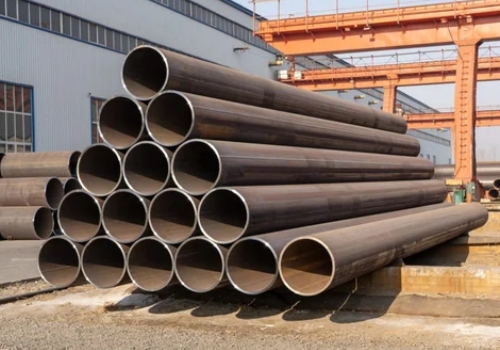
Bad manufacturing choices ruin your project timeline. These factors affecting the quality of high frequency welded pipe dictate the safety of your entire pipeline. Keep reading to see how we control every step to protect your construction projects.
Are your pipes cracking at the seam? A wrong gap size causes weak joints. You must demand precise gap control from your pipe manufacturer. Weld gap control directly changes the heat effect during manufacturing. A gap between 1 and 3 mm ensures perfect fusion. A large gap causes cracks. A small gap burns the metal and ruins the surface.
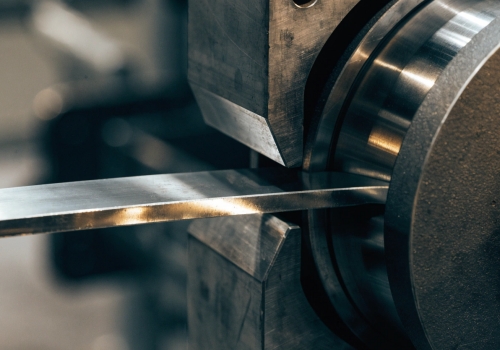
Let us look closer at why the gap size matters so much. When the steel strip enters the production line, multiple heavy rollers shape it into a round tube. The two open edges must meet perfectly at the welding point.
· Too narrow: The heat rises sharply. The metal burns and oxidizes. The weld seam looks terrible and loses its structural integrity. To help you understand the impact, look at this simple parameter table:
| Gap Size | Heat Level | Defect Risk | Final Result |
|---|---|---|---|
| Under 1 mm | Too high | Burning | Weak and ugly seam |
| 1 to 3 mm | Optimal | Very low | Strong, flawless fusion |
| Over 3 mm | Too low | Lack of fusion | Severe cracking |
Do you worry about incomplete fusion in your pipelines? Low heat leaves metal unfused. Correct temperature settings guarantee a solid and permanent bond. Welding temperature dictates if the metal edges reach a proper molten state. The current frequency controls this heat. If the heat remains low, the metal structure will not fuse. Proper temperature creates a secure joint that stops leaks completely.
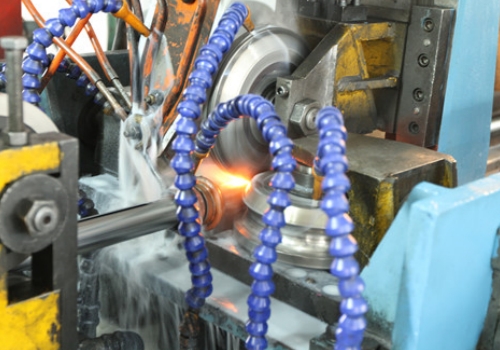
Temperature acts as the true heart of the welding process. The high-frequency current creates a strong thermal effect (heating the edges rapidly). This electrical effect heats the open edges of the steel strip until they reach a soft, melting state.
· High temperature: The metal melts too fast. It splatters everywhere. The wall thickness drops significantly at the seam. We must control the high frequency sensor position to manage this heat output perfectly.
· Close to the roller: The heating time remains short. The heat stays focused. The final weld is strong and neat.
· Far from the roller: The heating time becomes too long. The heat spreads too wide. The weld strength drops sharply.
| Heating Time | Heat Zone | Weld Strength |
|---|---|---|
| Short | Narrow | Very High |
| Long | Wide | Very Low |
I have seen contractors lose major bids because their pipes failed pressure tests due to poor heat control. We use advanced sensors to keep the heat zone narrow. This precise control creates a high-strength bond. Your field engineers will find these pipes easy to install and incredibly reliable for decades.
Are large burrs blocking the flow inside your pipes? Wrong squeeze pressure causes this mess. Precise extrusion force keeps the inner pipe smooth and strong. Extrusion force binds the heated metal edges together. Weak force prevents the metal from forming strong crystals. Heavy force pushes the good metal out of the seam. This weakens the weld and creates large internal burrs. After the steel edges reach the exact melting point, the squeeze rollers push them together. This physical push creates the extrusion force. It stands out as one of the most vital factors affecting the quality of high frequency welded pipe.
· Low pressure: The joint lacks strong crystals. The connection remains fragile. A simple bend on the job site will crack the seam wide open.
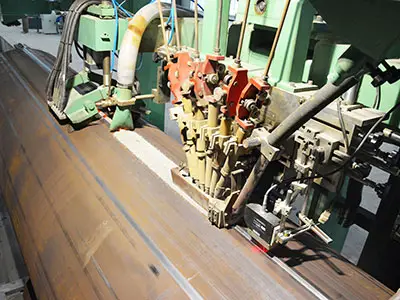
· High pressure: The rollers squeeze out the good liquid metal. The joint loses its core strength. Massive welding scars form on the inside and outside surfaces. To fix these ugly scars, we must remove them immediately while the metal is still hot.
1. Fix the sharp cutting tool tightly on the heavy machine frame.
2. Let the hot pipe move rapidly past the fixed blade.
3. Shave off the hot welding scar smoothly from the surface.
| Extrusion Force | Weld Strength | Burr Size |
|---|---|---|
| Weak | Low | Small |
| Perfect | High | Minimal |
| Strong | Low | Huge |
When you buy from us, you get pipes with perfectly smooth interiors (zero flow resistance). This means water, gas, or oil will flow easily without any friction. Smooth pipes save energy and reduce pump wear on all your construction projects.
Q: What is a high frequency welded pipe?
Q: How do you ensure the weld seam is perfectly flush?
A: We control the weld gap strictly between 1 and 3 mm and apply the exact extrusion force to prevent uneven edges.
Q: Why do some welded pipes have large burrs inside?
A: High extrusion force squeezes excess molten metal out of the joint. If the factory does not use a scar removal tool, the burrs remain inside.
Controlling gap, heat, and pressure ensures top-quality pipelines. Do not risk your projects with bad materials. Contact Centerway Steel today to order premium HFW pipes for your next job.











 English