

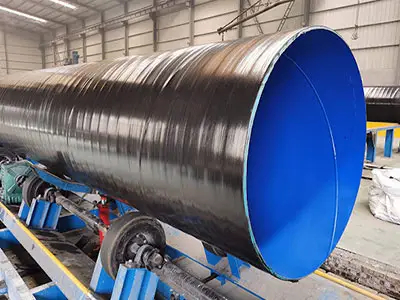
Pipeline projects need strong and reliable steel pipes. If you choose the wrong pipe, you face leaks and high costs. The right choice solves these safety and budget problems. An API 5L SSAW pipe is a spiral submerged arc welded steel pipe. We mainly use it for large-diameter oil, gas, and water transport. To choose the right one, you must check its grade, thickness, and welding quality based on your project needs and budget.
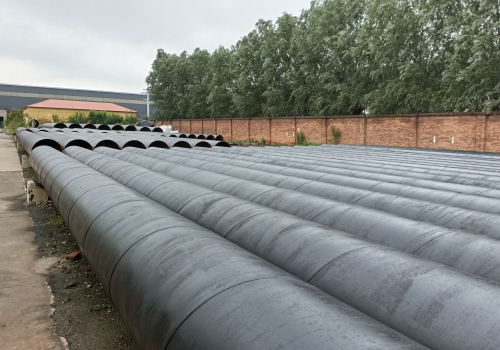
You might wonder if SSAW is better than other types. Many buyers get confused by the different specifications. Let us look deeper into the facts and see why many experts prefer this pipe today.
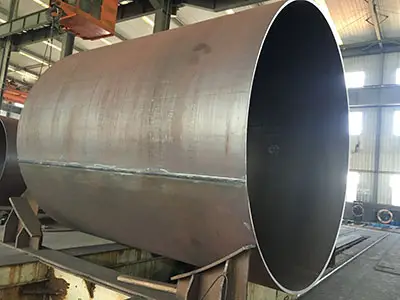
You want large pipes for a main line. Choosing between LSAW and SSAW can confuse you. A bad choice wastes money. Understanding their differences makes your buying process easy. The main difference lies in the welding seam. LSAW has a straight seam, while an API 5L SSAW pipe has a spiral seam. LSAW offers better dimensional accuracy, but SSAW provides more flexible sizes and better cost-efficiency.
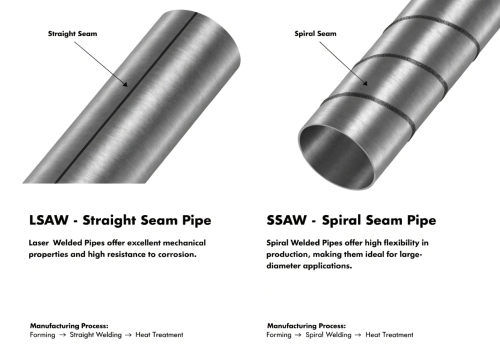
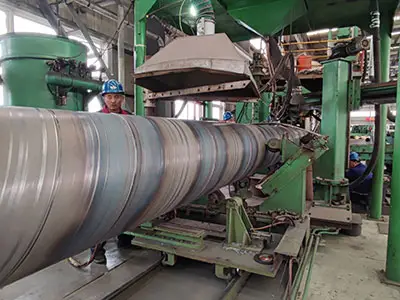
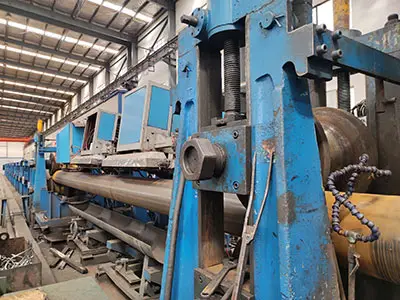
To break this question down, we need to look at how factories make these pipes. As a buyer with 18 years of experience in the construction industry, I always check the forming process first. For large main lines, seamless and ERW pipes are too small. We must use LSAW or SSAW.
SSAW pipes have a large residual tensile stress. This stress can reach 200 to 300 MPa. On the other hand, LSAW (especially UOE pipes) has compressive residual stress on the surface. The UOE process uses mechanical expanding. This step gives UOE pipes higher dimensional accuracy.
An API 5L SSAW pipe has a longer weld seam than an LSAW pipe. A longer weld means a higher chance of weld defects. UOE pipes separate the forming and welding steps. This makes the welding parameters easier to control. It also makes weld quality assurance easier. However, modern SSAW technology has improved a lot. We now produce SSAW pipes that meet strict safety standards.
| Feature | LSAW (UOE) | API 5L SSAW Pipe |
|---|---|---|
| Seam Type | Straight | Spiral |
| Residual Stress | Compressive (-200 to -300 MPa) | Tensile (200 to 300 MPa) |
| Dimensional Accuracy | Very High | High |
| Weld Length | Short | Long |
| Cost Efficiency | Lower | Higher for large sizes |
By understanding these points, you can balance cost and quality for your specific pipeline design.
Global standards can be tricky. If you follow the wrong country's trend, your project might fail local checks. Knowing global preferences helps you make safe and compliant decisions. Different countries have different views. Russia strongly prefers SSAW for main lines. Canada uses SSAW for about 70% of its main lines. The US, Japan, and Germany now use it for large main routes. Italy also allows SSAW in line pipes. I have worked with partners from many regions. Over the years, I saw how opinions on SSAW pipes changed. Let us look at the details.
In the past, the United States, Japan, and Germany had negative views on SSAW pipes. They thought main lines should not use them. But things changed. Seamless and ERW pipes have strict size limits. So, for nearly 20 years, they have used LSAW and SSAW for large oil and gas transport lines. In Canada, SSAW and LSAW have the exact same status. In real projects, Canada uses SSAW for about 70% of its main lines. Italy also officially allows the use of SSAW pipes in their pipelines.
Russia has a completely different story. They fully support SSAW pipes. In fact, Russia prefers SSAW column tubes for their main transport lines. They trust the spiral welding process for extreme conditions.
| Country or Region | Historical View | Current Usage of SSAW |
|---|---|---|
| Russia | Positive | Preferred for main lines |
| Canada | Positive | Accounts for 70% of main lines |
| US, Japan, Germany | Negative | Widely used for large routes |
| Italy | Positive | Allowed in line pipes |
This global shift proves that modern API 5L SSAW pipe production is reliable. As a professional integration supplier since 1996, Centerway Steel ensures our SSAW pipes meet these diverse global standards.
Finding a reliable supplier overseas is hard. Late deliveries and poor quality ruin construction schedules. Working with an experienced one-stop supplier removes these risks and saves you money. We recently supplied large batches of API 5L SSAW pipes to a major water pipeline project in Australia. We managed the entire process from production to delivery. We ensured strict quality control and provided all third-party testing reports.
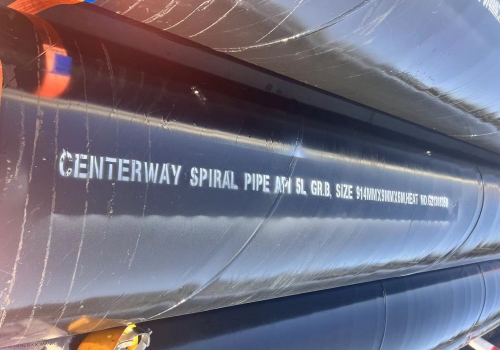
The Australian market has very strict quality rules. A few months ago, a large construction company in Australia contacted us. They needed a reliable supplier for their new urban pipeline network. They faced the challenge of finding a one-stop supplier who could handle everything from start to finish.
The client needed high-strength, large-diameter pipes. They wanted to save costs but could not drop their quality standards. I used my 18 years of industry experience to guide them. I suggested the API 5L SSAW pipe. It perfectly matched their large-diameter needs and kept them under budget.
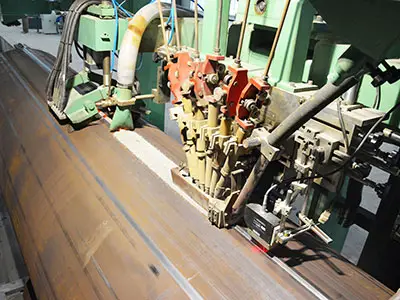
At Centerway Steel, we used our first-class production capabilities. We manufactured the pipes with high precision. We also arranged SGS third-party inspections to prove the quality. We handled the inventory, packing, and shipping. The client received the pipes on time.
| Project Detail | Australian Pipeline Project |
|---|---|
| Product Supplied | API 5L SSAW Pipe |
| Application | Urban Pipeline Network |
| Certification | ISO 9001, SGS Inspected |
| Client Benefit | Reduced total sourcing cost by 15% |
Buyers still have doubts about technical specs. Unanswered questions cause delays in ordering. Clear and direct answers give you the confidence to buy the right pipes quickly. Buyers often ask about size limits, defect rates, and best applications. We compiled these common questions. Knowing these answers helps you avoid purchasing mistakes. It ensures you select the correct pipe for your oil, gas, or water transport project. To help you further, I have listed some common questions our clients ask. We always believe in a customer-oriented approach. Clear communication is key to a win-win cooperation.
Q: What does API 5L stand for?
A: API stands for the American Petroleum Institute. The 5L specification covers seamless and welded steel line pipes. We use them for pipeline transportation systems in the petroleum and natural gas industries.
Q: Can I use an API 5L SSAW pipe for high-pressure lines?
A: Yes, you can. Modern SSAW pipes undergo strict ultrasonic testing and X-ray checks. As long as the pipe meets the specific grade and pressure needs of your project, it is very safe for high-pressure use.
Q: Why is the weld seam of an SSAW pipe longer?
A: The factory rolls the steel strip in a spiral shape. This action naturally creates a spiral seam. A spiral seam is always longer than a straight seam on an LSAW pipe.
Q: How do you guarantee the quality of your pipes?
A: We have ISO 9001, ISO 14001, and CE certifications. International groups like SGS and BV also inspect our products. We control every step from production to final shipping.
Choosing the right API 5L SSAW pipe requires understanding its process and global standards. Partner with Centerway Steel for reliable, one-stop pipeline solutions that save you time and money.











 English