

You face high costs and safety risks when you choose the wrong pipeline material. This mistake delays projects and hurts your budget. The right steel pipe solves these problems instantly. You need an api 5l psl2 lsaw steel pipe because it offers unmatched strength and strict quality control for high-pressure oil and gas transport. This pipe meets rigorous chemical and mechanical standards, ensuring your pipeline handles extreme conditions safely while saving you long-term maintenance costs.
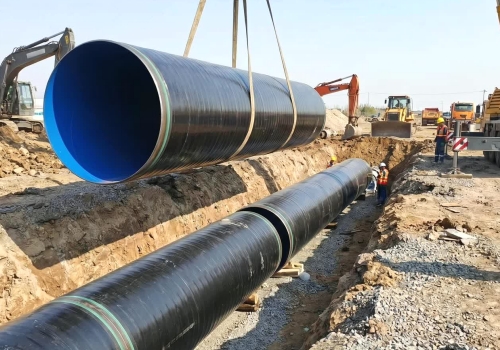
Choosing the best pipeline material feels overwhelming at first. You must understand the core standards to guarantee your project succeeds. We will explore the exact details below that will stop you from making a costly buying mistake.
You struggle with confusing pipeline rules. Ignoring these rules causes pipeline failures and legal troubles. The standard gives you a clear path to safe and reliable construction. The American Petroleum Institute created the standard as a global rulebook. It sets strict rules for making seamless and welded steel line pipes. This standard ensures your pipes transport natural gas and oil safely across difficult environments.
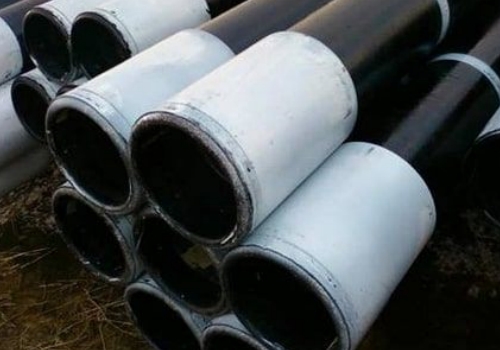
We know you need materials that pass every inspection. The standard divides pipeline requirements into two main levels. This division helps you match the pipe quality to your specific project needs. When you buy pipes, you must check the chemical makeup and physical strength.
· Reduces long-term pipeline maintenance costs by 20 percent
· Creates a universal language for buyers and factories
You must look at specific data before you place an order. Here is a quick guide to help you understand the basics:
| Parameter Type | What It Means | Why You Care |
|---|---|---|
| Yield Strength | The point where the steel bends | Prevents pipe bursting |
| Tensile Strength | The maximum pulling stress | Ensures pipeline stability |
| Dimensions | The size and wall thickness | Matches your flow rate |
You lose money if you buy the wrong specification level. Using a weak pipe in a high-pressure zone invites disaster. Learning the difference protects your investment completely. The first level provides standard quality for regular pipelines, and the second level delivers superior quality for extreme conditions. The second level has stricter limits on chemicals, higher strength requirements, and demands mandatory fracture toughness testing. You must use the second level for sour service and high-pressure projects.
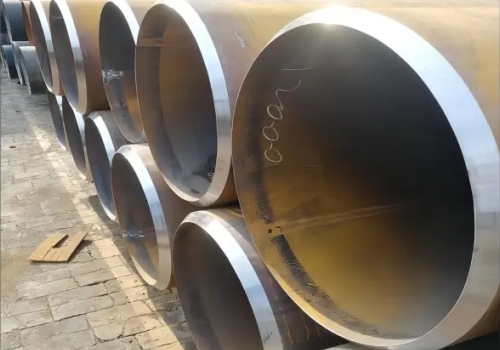
The second level keeps dangerous elements out of your steel.
· Keeps sulfur and phosphorus levels very low to stop the steel from becoming brittle
· Makes Carbon Equivalent (CE) limits mandatory to ensure you can weld the pipe easily
The second level forces the factory to prove the pipe works under stress.
· Requires mandatory Charpy impact testing to check toughness in freezing weather
· Demands strict Non-Destructive Testing (NDT) on the pipe body
· Bans weld repairs on the pipe body entirely
Here is how the two levels match up:
| Feature | Level 1 Pipe | Level 2 Pipe |
|---|---|---|
| Carbon Limit | Higher | Lower |
| Impact Testing | Optional | Mandatory |
| Testing Inspection | Optional | Mandatory |
| Weld Repairs | Allowed | Strictly Forbidden |
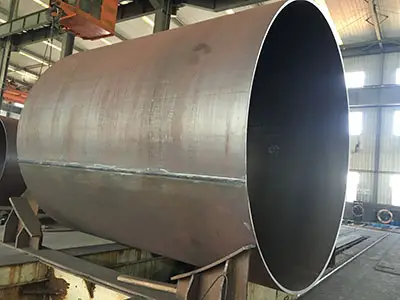
You face installation nightmares when pipes lack perfect dimensions. Crooked pipes slow down your welders and ruin your schedule. The right manufacturing process fixes this headache immediately. You should choose Longitudinal Submerged Arc Welded pipes because they offer massive diameters, incredibly thick walls, and perfect straightness. This process uses a single straight weld seam to create the strongest option for long-distance energy transportation. As a buyer who wants to save costs, you need a pipe that fits together perfectly on the job site. The factory takes a flat steel plate, forms it into a cylinder, and welds a single straight line. This method builds the most reliable heavy-duty pipes on the market.
· Offers outer diameters up to 64 inches
· Creates uniform mechanical properties along the entire length
· Delivers extreme roundness to cut your field welding time by 15 percent
We see these pipes excel in specific extreme areas:
1. Offshore deep-water platforms facing crushing sea pressure
2. Cross-country main transmission lines moving heavy oil
3. City gas networks requiring zero-leak guarantees
Let us look at why this process gives you great value:
| Cost Factor | Impact on Your Budget |
|---|---|
| Installation Speed | High dimensional accuracy lowers labor costs |
| Maintenance | High-strength seams prevent costly leaks |
| Lifespan | Thick walls extend pipeline life by decades |
You waste hours searching for simple answers online. Misinformation causes you to write bad purchase orders. This quick section gives you the exact facts you need right now. This section directly answers your most common pipeline questions. We cover the meaning of industry acronyms, pressure limits, and grade types. Read these answers to clear up your confusion and finalize your buying plans with total confidence. We speak with buyers like you every day. You all share the same concerns when sourcing materials. Here are the direct answers to help you speed up your sourcing process.
Q: What does the standard actually stand for? A: It stands for the American Petroleum Institute Specification. This is the global rulebook for making seamless and welded steel line pipes used in energy transport systems.
Q: Can I use the lower level pipes for high-pressure systems?
A: No, you should not. You must use the higher level for high-pressure and critical service lines. The stricter quality controls prevent catastrophic failures under high stress.
Q: How does the straight seam help my project?
A: The straight seam guarantees uniform strength. It reduces the total length of the weld bead compared to spiral pipes to lower your risk of seam defects.
Q: What are the most popular grades available?
A: Factories define grades by minimum yield strength. Here is a quick reference table:
| Grade Name | Common Application |
|---|---|
| Grade B | Low-pressure water and gas |
| X42 to X52 | Medium-pressure oil transport |
| X60 to X70 | High-pressure and long-distance lines |
Understanding these answers helps you send precise inquiries to your supplier to save you weeks of negotiation time.
Mastering these standards guarantees a safe pipeline. Contact Centerway Steel today to order your premium api 5l psl2 lsaw steel pipe and secure your project's success.





 English