

You want high-quality pipes. Bad welds waste your money. I will show you the exact causes of hfw steel pipe defects in production to help you avoid bad purchases. Hfw steel pipe defects in production come from improper welding adjustments, bad strip edge shapes, roller wear, and dirt. You must check external burrs, misalignment, surface indentations, and high-frequency sparks. You can control these factors to ensure high pipe quality and save project costs.
Do you struggle with poor weld quality on your sites? I see many buyers face this issue. Read the details below to protect your next order. Will you let minor flaws ruin your pipeline?
You need strong welds. Flat or inclined burrs mean weak joints. I explain burr shapes below to help you spot bad welding immediately. External burrs form during high-frequency heating and extrusion. A good burr looks like a mushroom. Flat burrs mean excessive welding power. Inclined burrs indicate plate edge misalignment. You can judge the weld strength directly by observing the shape of these external burrs.
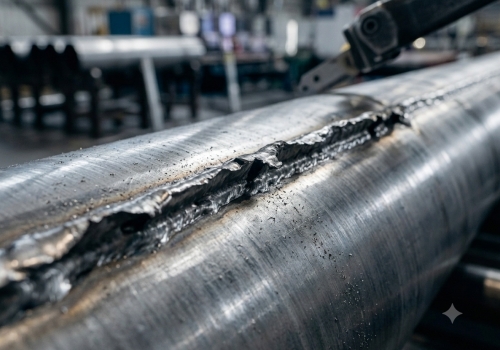
I check burr shapes every day in our production lines. The burr shape gives you instant feedback on the welding process. We must look at the balance between welding power and extrusion rates. A low extrusion rate needs lower welding power. A high extrusion rate needs higher welding power. We must match them perfectly.
Flat burrs show an overburning problem. The factory uses too much power. This makes the weld heat-affected zone too wide. Impurities stay inside the weld. The pipe will crack during pressure tests. You do not want these pipes on your site.
Inclined burrs happen when the two plate edges do not meet perfectly. The machine pushes the molten metal out of place. This creates unequal stress. I use this simple table to train my quality team. You can use it to check your suppliers.
| Burr Shape | Cause | Result |
|---|---|---|
| Mushroom | Good power and extrusion | Strong weld |
| Flat | Too much welding power | Cracking risk |
| Inclined | Edge misalignment | Unequal stress |
Uneven pipe walls cause leaks. Bad strip edges create severe misalignment. I show you the causes below to stop these failures. Strip edge misalignment reduces the effective wall thickness. This creates stress concentration points. Different extrusion roller heights or wrong roller angles cause this issue. Bad steel strip quality like sickle bends also leads to twisted welds and weak pipe joints.
I test the fusion state to find edge problems. We use a semi-welded test. We break the specimen along the weld seam. The fusion zone looks silvery-white. The unfused zone looks bluish-black. The boundary forms a C-shape. This shows us the exact quality of the bond. We check the streamline angles under a microscope.
Misalignment happens for several reasons. The two upper extrusion rollers often sit at different heights. The factory must adjust one roller. The welding side rollers sometimes apply unequal force. The worker must add or remove metal gaskets to fix the frame.
Weld twist is a serious defect. Damaged guide plates cause this twist. Broken bearings also ruin the alignment. You must ask your supplier about their equipment maintenance.
| Defect Type | Equipment Cause | Material Cause |
|---|---|---|
| Height Misalignment | Different upper roller heights | None |
| Angle Misalignment | Asymmetric side rollers | Worn strip edge |
| Weld Twist | Damaged finishing bearings | Sickle bends |
Surface damage ruins pipe coatings. Indentations and pits weaken the steel. I list the main causes below to help you demand flawless surfaces. Roller wear and poor roller positioning cause linear and crescent-shaped indentations on steel pipes. Pits form when oxide scale sticks to the rollers. Factories must grind worn rollers and wash away oxide scale with strong emulsion sprays to keep the pipe surface smooth.
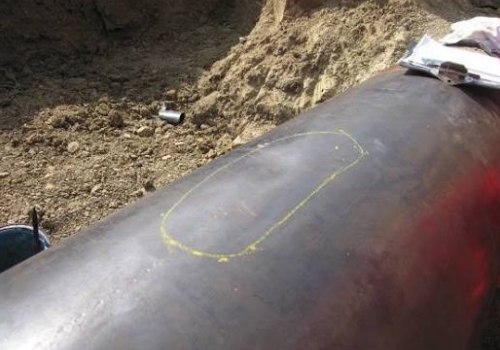
I reject pipes with continuous linear indentations. Poor roller matching causes these marks. The top roller and side roller sit too close or too far apart. The operator must raise the top roller or adjust the side rollers. Discontinuous lines mean a broken roller bearing. The factory must stop the machine and replace the parts immediately.
Crescent shapes mean the roller surface has severe wear. The roller spins fast and creates high friction. The factory must grind the rollers online to fix this.
Heat treatment creates oxide scale. This scale sticks to the upper sizing roller. A weak emulsion spray fails to wash it away. The scale builds up and presses pits into the steel pipe. I always check the emulsion flow rate on our lines.
| Surface Defect | Main Cause | Solution |
|---|---|---|
| Continuous Line | Bad roller position | Adjust roller height |
| Broken Line | Damaged roller bearing | Replace bearing |
| Crescent Mark | Worn roller surface | Grind roller online |
| Pits | Accumulated oxide scale | Increase spray flow |
Sparking stops production. Unplanned stops delay your delivery. I explain the root causes of sparking below to help you evaluate supplier reliability. High-frequency sparking happens due to dirty emulsion, sheet edge burrs, and worn sealing blades. Accumulated dirt near induction coils causes electrical shorts. These sparks ruin the weld quality and force the machine to stop. Clean equipment and trimmed sheet edges prevent this problem.
I see many poor factories ignore machine cleanliness. Metal oxide impurities pollute the emulsion. These oxides create unwanted electrical contact. Dirt builds up near the induction coils over time. This dirt causes sudden electrical shorts and massive sparks. The factory must clean the area daily.
Slitting creates burrs on the sheet edges. These burrs touch each other before the V-angle closes. This early contact causes sparks. Worn FP rollers cause another problem. The sealing blades develop deep grooves. These grooves shear the plate edge and create more burrs.
Loose induction components destroy the insulation. Long-term vibration loosens the parts. Sparking damages the high-frequency equipment permanently. I mandate strict weekly maintenance to prevent these electrical failures.
| Spark Cause | Origin | Prevention |
|---|---|---|
| Dirty Emulsion | Metal oxides in fluid | Filter fluid regularly |
| Coil Dirt | Accumulated dust/scale | Daily coil cleaning |
| Edge Burrs | Bad slitting process | Trim edges properly |
| Worn Blades | FP roller wear | Replace sealing blades |
Q: How can I check for hfw steel pipe defects in production?
A: You can check the external burr shape, inspect the surface for indentations, and ask the supplier for high-frequency weld metallographic test reports.
Q: Why is the weld heat-affected zone too wide?
A: The factory used excessive welding power. This causes flat external burrs and leaves impurities inside the weld.
Q: What causes twisting in the steel pipe weld?
A: Damaged finishing roller bearings, asymmetric side rollers, or bad steel strip quality like sickle bends cause weld twisting.
Hfw steel pipe defects in production come from bad roller adjustments, worn parts, and dirty equipment. You must check burrs and surfaces to guarantee strong pipes and save costs.











 English