

Sourcing the wrong foundation materials causes project delays and safety hazards. You want to avoid cost overruns and ensure structural stability. This guide clarifies the essential technical details you need. Steel sheet pile specifications are the technical data defining dimensions, mechanical properties, and manufacturing standards like ASTM or EN. Knowing these ensures you select the right U-type or Z-type piles for foundation support, ensuring structural integrity and cost-efficiency for your construction projects.
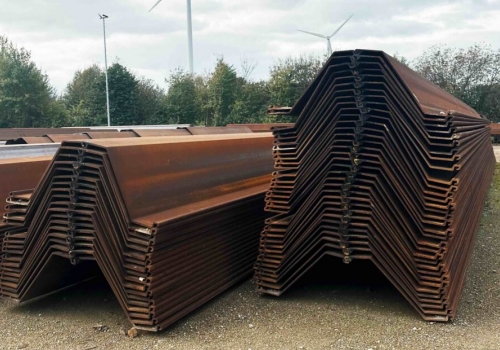
Understanding the basics is important, but we must look at the specific types available in the market to make the right choice.
Choosing between shapes and production methods is confusing for many buyers. Making the wrong choice weakens the retaining wall. Here is the breakdown of the types. Hot-rolled piles offer better water tightness, while cold-formed ones are cost-effective. U-shapes are common, but Z-shapes offer a higher modulus of section. Your choice depends on the specific steel sheet pile specifications required by the soil conditions and the design load.
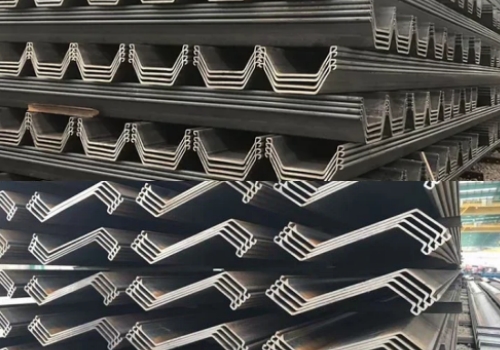
I have worked with many engineers who struggle to decide between hot-rolled and cold-formed piles. This decision affects your budget and the safety of the project. We need to look at this in detail. First, let's talk about the manufacturing process. Hot-rolled steel sheet piles are produced at high temperatures. This process creates a very tight interlock. If your project is in water, like a cofferdam or a port, you need hot-rolled piles. They stop water from leaking through the wall. Cold-formed piles are made by bending steel coils at room temperature. The interlock is looser. However, they are cheaper and lighter. They work well for temporary retaining walls on land. Next, we look at the shape. The shape determines how strong the pile is against bending. The most common shapes are U-type, Z-type, and H-type.
· U-Type (Larssen): This is the traditional shape. It is easy to handle and re-use.
· Z-Type: This is more modern. It places the metal far from the neutral axis. This means it gives more strength for less weight. It saves you money on material costs.
· H-Type: These are not for water retention. We use them when we need to support very heavy vertical loads. Below is a table to help you compare the two main production methods:
| Feature | Hot-Rolled Steel Sheet Piles | Cold-Formed Steel Sheet Piles |
|---|---|---|
| Interlock | Tight, good water seal | Loose, less water tight |
| Strength | High stiffness | Good, but residual stress exists |
| Usage | Permanent marine structures | Temporary land support |
| Cost | Higher | Lower |
| Variety | Limited shapes | Many widths and thicknesses |
At Centerway Steel, we supply both types. I usually advise my clients to check the "section modulus" in their design. This number tells you how much load the pile can take. If you need a high section modulus, Z-type is usually the most efficient choice.
Standards vary by country and this creates confusion. Mixing them up causes inspection failures and rejection at the site. You must know the equivalent grades. Major standards include EN 10248 for Europe, ASTM A572 for America, and JIS A 5523 for Asia. These documents dictate the chemical composition and mechanical properties. Adhering to the correct steel sheet pile specifications guarantees acceptance by third-party inspectors like SGS and TUV.
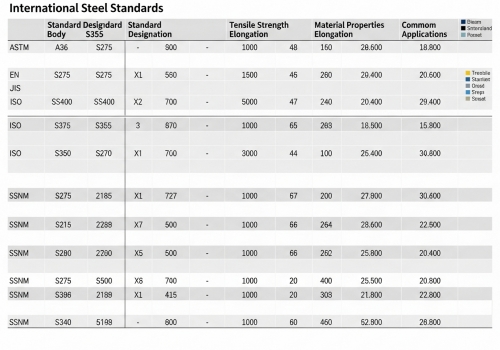
As a purchasing manager, you deal with codes and certificates every day. I know it is a headache when the drawing says one thing and the supplier offers another. You need to verify that the steel sheet pile specifications match the project location and requirements. Here are the most important standards you will see in the industry:
1. EN 10248 (Europe): This is the standard for hot-rolled piles. If your project is in Germany or anywhere in Europe, you must follow this. The common grades are S270GP, S355GP, and S430GP. The number stands for the yield strength. S355GP is the most popular because it balances strength and cost.
2. ASTM A572 / ASTM A690 (USA): This is common in the Americas and many oil and gas projects globally. ASTM A572 Grade 50 is the standard choice. It has a yield strength of 50 ksi (about 345 MPa). If you work in seawater, you might see ASTM A690. This grade has added copper and phosphorus to resist rust.
3. JIS A 5523 / A 5528 (Japan): These are used often in Asia. SY295 and SY390 are the main grades. They are very similar to the European grades but not identical.
4. GB/T 20933 (China): Since we manufacture in China, we follow this strictly. It aligns well with ISO standards. Why does this matter? Because the carbon content and alloy elements change the welding performance. If you need to weld the piles, you must know the chemical composition. Also, the yield strength determines if the pile buckles during driving. I have created a simple reference table for equivalent grades. This helps when you need to substitute materials:
| Standard | Low Strength Grade | Medium Strength Grade | High Strength Grade |
|---|---|---|---|
| EN 10248 | S270GP | S355GP | S430GP |
| ASTM | A328 | A572 Gr. 50 | A572 Gr. 60 |
| JIS A 5523 | SY295 | SY390 | - |
| GB/T 20933 | Q295 | Q355 | Q420 |
Always ask for the Mill Test Certificate (MTC). At Centerway Steel, we provide MTCs that show the exact chemical and mechanical data. This proves the steel meets the standard.
Buying cheap piles that rust or bend quickly ruins your reputation. You need long-term reliability for your client. Let’s look at the key performance factors. Strength determines load capacity, but durability decides lifespan. Steel sheet pile specifications often include requirements for corrosion resistance and coating thickness. Checking these parameters ensures the piles withstand harsh environments like seawater or acidic soil for decades without failure.
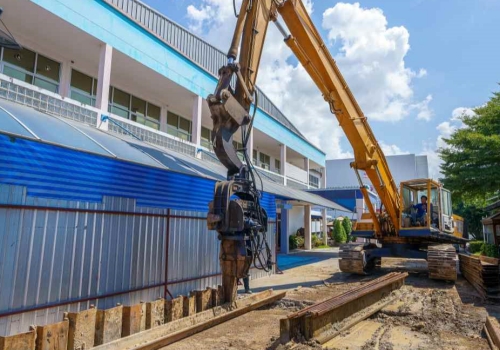
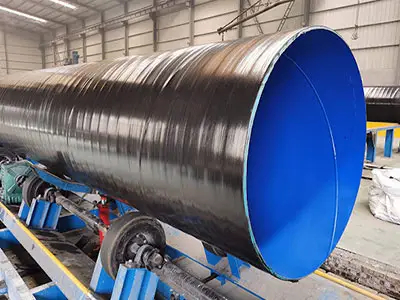
We need to talk about what happens after you buy the piles. The design looks good on paper, but the real world is harsh. The soil moves, the water is salty, and the driving hammers are heavy. 1. Strength and Stability The most critical part of steel sheet pile specifications is the yield point. This is the force the steel can take before it deforms permanently. During installation, we use dynamic pile pressing or static pressing. If the steel is too weak, the pile head will buckle under the hammer. This stops work immediately. High-quality steel from Centerway ensures the pile stays straight and goes down deep. 2. Durability and Corrosion Steel rusts. This is a fact. In marine environments, corrosion is fast. You have two options. You can increase the thickness of the steel. This is called "sacrificial thickness." Or, you can use high-performance coatings. We often apply coal tar epoxy or glass flake coatings in our factory. This adds 15 to 20 years to the pile's life. You need to specify this in your order. 3. Reliability and Testing How do you know the pile is good? You rely on testing.
· Tensile Test: Pulling the steel to see when it breaks.
· Impact Test: Hitting the steel at low temperatures. This is vital for projects in cold areas like Northern Europe. If the steel is brittle, it will crack in winter.
· Dimensional Inspection: We check the width, height, and wall thickness. If the interlocks are bent, they will not fit together at the site. 4. Environmental Safety We must also think about the environment. Driving piles creates noise and vibration. Using static pressing machines reduces this. Also, we must ensure any coatings used are safe for the water and do not release toxins. Here is a checklist for your next inquiry to ensure performance:
1. What is the required Yield Strength (MPa)?
2. Is there a requirement for Impact Testing (Joules at 0°C or -20°C)?
3. What is the corrosion rate at the site? Do you need extra thickness?
4. Is a protective coating required?
To secure your project, you must understand the shape, the manufacturing standard, and the durability requirements. Correct steel sheet pile specifications ensure safety and save money. Centerway Steel is ready to help you choose the right products.











 English