

You are under pressure to cut project costs without sacrificing structural integrity. It is a headache that keeps many sourcing managers awake at night. An erw steel pipe (Electric Resistance Welded pipe) is a cold-formed steel pipe manufactured by rolling a steel strip into a cylinder and fusing the edges using electric current. It offers a cost-effective, high-strength solution with accurate wall thickness, making it the ideal choice for low-to-medium pressure pipelines and construction projects.
I know that choosing the right pipeline material is difficult. You have many options, and making the wrong choice can lead to project delays or safety risks. However, if you stop reading now, you might miss out on a solution that could save your company 30% on material costs while still meeting international standards.
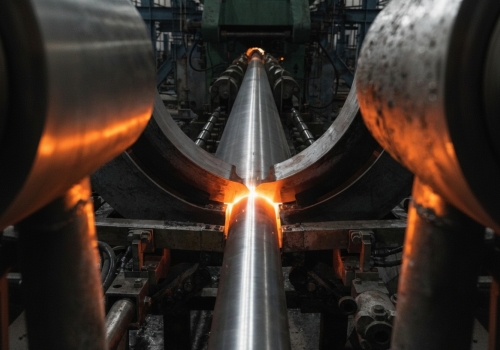
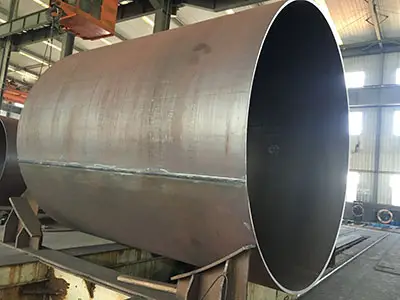
You worry about the quality of the weld seam in pipes. You might think that a welded pipe is naturally weaker than a solid bar, and this concern is valid for older technologies. The modern manufacturing process of erw steel pipe uses high-frequency induction technology (HFW) to create a bond stronger than the parent metal itself. It starts with a flat steel strip, which is cold-formed into a round shape and then welded without adding any filler metal, ensuring a consistent and durable structure.
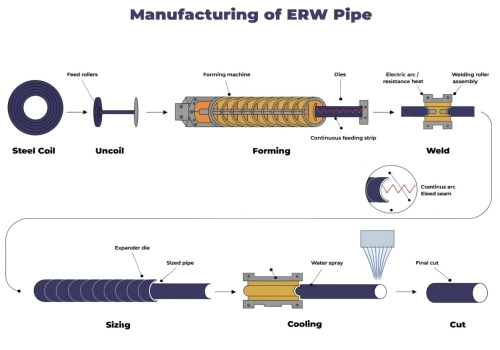
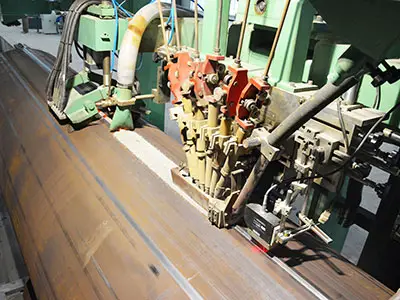
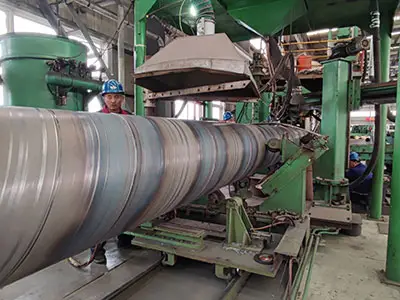
Based on my experience at Centerway Steel, I want to break this process down for you. Many people think "welding" means sparks and messy joints, but modern ERW is much more precise. We need to look at this with a critical eye. The process is not just about bending steel; it is about controlling the grain structure of the metal. When we manufacture these pipes, we use High-Frequency Welding (HFW). This generates heat specifically at the edges of the strip. Why does this matter? Because it minimizes the Heat Affected Zone (HAZ). A smaller HAZ means the pipe retains the strength of the original steel. After welding, we perform an inline annealing process. This treats the weld seam with heat again to remove stress. This makes the weld as strong as the rest of the pipe. Here is a breakdown of the critical steps we take to ensure quality:
| Process Step | Description | Why it Matters to You |
|---|---|---|
| Uncoiling | We flatten the steel coil. | Ensures the pipe has a uniform wall thickness throughout. |
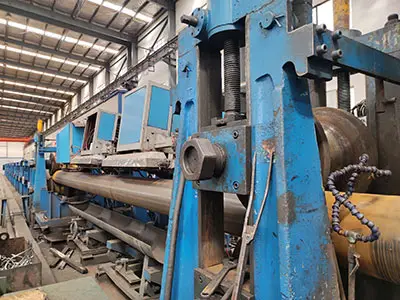
| Forming | Rollers gradually bend the strip into a cylinder. | Creates a perfect round shape and precise diameter. |
| Welding | High-frequency current heats edges to forge them. | No filler metal is used, reducing the risk of impurities in the steel. |
| Seam Annealing | The weld area is heat-treated immediately. | Removes internal stress and prevents the seam from cracking under pressure. |
| Sizing & Cutting | The pipe passes through sizing rolls. | Guarantees the dimensional accuracy you need for easy installation. |
This process allows us to produce pipes with very tight tolerances. Unlike seamless pipes, which are extruded, our ERW pipes start from a rolled sheet. This means the wall thickness is consistent from end to end. For a construction project, this consistency makes welding and joining much easier on-site, saving your team valuable time.
You might believe that "Seamless" always means "Better." This is a common misconception that often leads companies to overspend significantly on materials they do not actually need. While seamless pipes have no weld line, erw steel pipe is often the superior choice for standard construction and low-pressure transmission because it is significantly cheaper and has better surface quality. Unless you are operating under extreme pressure or temperature, paying the premium for seamless pipe is often unnecessary.
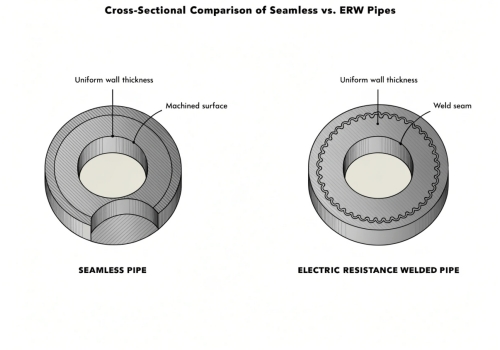
Let us dive deeper into this comparison. I have worked with many EPC companies, and the biggest challenge is always balancing the budget with technical requirements. You need to understand the trade-offs. Seamless pipe is made from a solid billet. It is excellent for high-pressure environments like deep-sea oil drilling. However, the manufacturing process is expensive and slow. On the other hand, ERW pipe technology has advanced massively since 1996. The "weak seam" issue is largely a thing of the past due to HFW technology. From a supply chain perspective, ERW is faster to produce. We can manufacture large quantities in a short time. This is crucial when your project has a tight deadline and you cannot afford to wait months for material. Furthermore, let's talk about surface finish. Because ERW pipe is made from high-quality flat steel coils, the surface is smooth and clean. This makes it excellent for coating. If you need to paint, galvanize, or coat the pipe for corrosion resistance (like 3PE coating), ERW provides a better base than the rougher surface of seamless pipes. Here is a comparison to help you decide:
| Feature | ERW Steel Pipe | Seamless Steel Pipe |
|---|---|---|
| Cost | Low to Medium (Cost-effective) | High (Expensive) |
| Production Speed | Fast (Short lead time) | Slower |
| Wall Thickness | Very Uniform (Consistent) | Can vary slightly |
| Pressure Rating | Low to Medium (Standard use) | High to Very High (Critical use) |
| Max Diameter | Can be very large (up to 24" usually) | Limited by billet size |
| Surface Finish | Smooth and excellent for coating | Rougher |
If you are building a city pipeline network, a steel structure, or a standard water line, choosing ERW is the smart financial move. It performs the job perfectly without draining your budget.
You are afraid of buying a product that does not meet the specific engineering standards of your region. Using non-compliant materials can lead to failed inspections and costly rework. We supply erw steel pipe that strictly follows international standards like API 5L, ASTM A53, and EN 10219, ensuring they are safe for oil transport, structural piling, and machinery. Whether you are in Germany or Southeast Asia, these pipes are designed to fit into your global supply chain seamlessly.
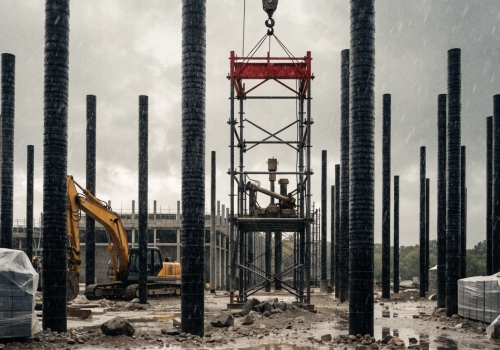
Let's analyze the specific applications and materials. Because we at Centerway Steel integrate production and sales, we see where these pipes actually go. It is not just about moving fluid; it is about matching the right steel grade to the right environment. First, consider the Oil and Gas Industry. While high-pressure lines use seamless, the vast majority of surface transportation lines use ERW pipes. We produce pipes adhering to API 5L grades (like X42, X52, X60). These are tough enough to transport oil and gas over long distances on land. The material must be able to withstand environmental stress, which is why we test rigorously. Second, look at the Construction and Infrastructure sector. This is huge. Round ERW tubes are used for piling (foundation support), scaffolding, and structural columns. Why? Because they have a high strength-to-weight ratio. Square and rectangular hollow sections (SHS and RHS), which are also produced via the ERW process, are standard in modern building frameworks. Third, we also need to discuss Coatings and Durability. An ERW pipe is rarely used "bare" in harsh environments. We offer various finishes to extend the life of the pipe:
· Varnish: A clear coat for a better look.
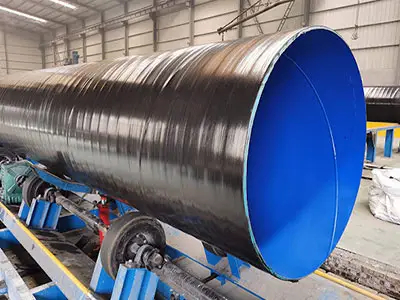
· 3PE (Three-Layer Polyethylene): Essential for underground oil/gas pipes to prevent corrosion for decades.
· Galvanizing: Dipping the pipe in zinc. This is critical for outdoor construction to prevent rust. When you source from a one-stop supplier like us, you can get the pipe and the coating together. You do not need to send the pipe to a third party. This saves you logistics costs and ensures the product arrives ready to install.
An erw steel pipe is a strong, reliable, and budget-friendly solution for construction and low-pressure fluid transport. By choosing Centerway Steel, you get high-quality pipes that meet global standards, ensuring your project succeeds safely and economically.











 English