

You need strong pipes for big projects. Weak pipes cause dangerous leaks. They also cause bad delays. I will show you the history of the JCOE method. This history helps you choose better pipes. People often ask when was jcoe method developed for lsaw pipes. Engineers developed the JCOE method in the middle to late 20th century. This process allowed factories to make large pipes. These pipes carry high-pressure oil and gas safely.
Understanding this history gives you a big advantage in sourcing. Let us look closer at how this technology changed the steel pipe industry.
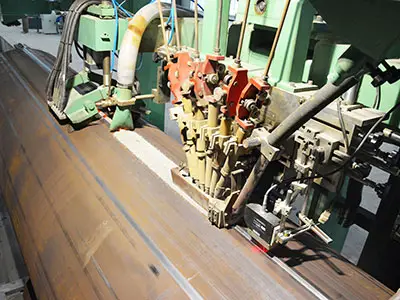
Old pipelines often failed under high pressure. This cost companies a lot of time and money. The early 20th century brought new submerged arc welding technology. This new technology fixed the pipeline problem. LSAW steel pipes originated in the early 20th century. The demand for oil and natural gas transportation grew fast. Early welding was simple. But it laid the foundation for modern strong pipes. We use these modern pipes in deep seabeds today. I remember a meeting with a buyer from Australia. He asked me about the strength of old pipelines. I explained the facts to him. Early pipes could not handle modern pressures. Submerged arc welding technology improved a lot from the middle to the late 20th century. It offered stable quality. It provided high productivity. It produced no arc flash. It made very little smoke. This improvement changed everything for large pipeline construction. We at Centerway Steel saw this shift in global demand. Countries in Europe and Africa needed longer pipelines. They required safer materials for harsh environments. The early days set the stage for better forming processes. Engineers needed a way to shape thick steel plates into perfect cylinders. This need led to new mechanical methods. Factories tested many ways to bend steel. The evolution from simple welding to advanced flux usage improved efficiency. European countries mastered these techniques by the 1980s. They increased the use of non-melting flux. This step raised the quality of the weld seam. I always tell my buyers this history. It helps them trust our products.
| Feature | Early 20th Century | Late 20th Century |
|---|---|---|
| Welding Quality | Basic and simple | Highly stable and strong |
| Flux Usage | Melting flux | Non-melting flux |
| Production Speed | Slow | High productivity |
| Environment | Smoky | No arc and little smoke |
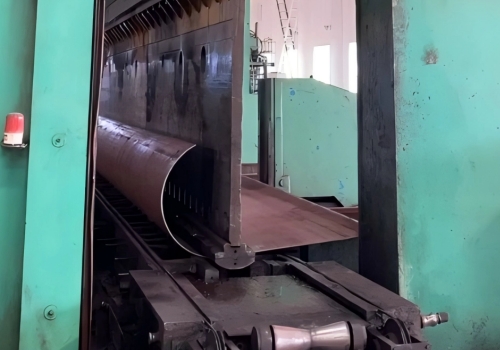
Finding the right pipe forming process is hard. Wrong choices lead to cracked seams. The JCOE method solved this problem. It bends steel in safe steps. To answer when was jcoe method developed for lsaw pipes, it emerged in the late 20th century. It gained wide use by the 1980s. The step-by-step J-C-O-E pressing process improved the production of large and strong pipes greatly.
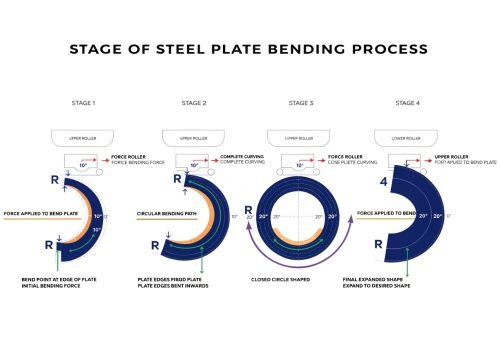
Let us break down the timeline of this technology. Global infrastructure grew very fast in the 1980s. Companies needed a flexible way to make pipes of different sizes. The older UOE method was fast. But it was very expensive to set up. It also lacked flexibility for small orders. So engineers created the JCOE process. They press the steel plate into a "J" shape first. Next they press it into a "C" shape. Then they press it into an "O" shape. Finally the "E" stands for expansion. Expanding the pipe makes the roundness perfect. I have sold many JCOE pipes to clients in Africa. They use them for long water pipelines. They always praise the precise dimensions. The Chinese government pushed infrastructure hard after the 1980s. Chinese factories learned this JCOE technology quickly. Centerway Steel adopted these advanced forming processes early. We supply the world with high-quality pipes. We improved our efficiency. We lowered costs for our clients. Domestic enterprises launched new JCOE products. They hold independent intellectual property rights. This makes China a key global supplier.
Step
Shape formed
Purpose of Step
1
"J" Shape
Pre-bend the edges of the steel plate
2
"C" Shape
Bend the main body of the plate
3
"O" Shape
Close the plate into a full circle
4
"E" (Expansion)
Remove stress and perfect the round shape
Choosing between UOE and JCOE confuses many buyers. Picking the wrong one ruins project budgets. Comparing them clearly helps you save money. The UOE method is very fast. It suits huge orders of one size. The JCOE method is slower but much more flexible. It costs less to set up. JCOE easily handles various pipe sizes for different project needs. You must match the production method to your project size. I recently worked with a buyer for a port construction project in Europe. They needed many different pipe sizes for piling. I recommended the JCOE method to them. Changing molds in a JCOE machine is fast. It is also cheap. The factory charges a huge setup fee for small batches of UOE pipes. UOE needs massive presses. These presses form the "U" and "O" shapes at once. JCOE uses multiple smaller presses. This step-by-step pressing reduces stress on the steel. It makes the pipe very strong. Chinese enterprises improved the JCOE process a lot since the start of the 21st century. They created new innovations. These innovations make Chinese JCOE pipes very competitive globally. We at Centerway Steel share this high-quality China-made product with global customers. We provide one-stop pipeline product services. We save time and money for our buyers.
Feature
UOE Process
JCOE Process
Production Speed
Very high
Moderate
Setup Cost
Very expensive
Low and affordable
Flexibility
Poor (best for one size)
Excellent (great for many sizes)
Order Size
Massive quantities
Small to medium batches
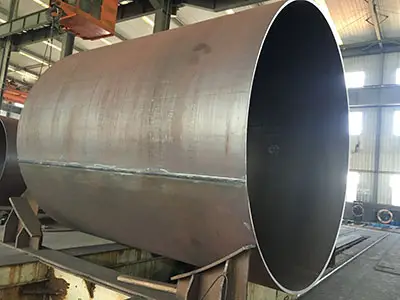
Sourcing pipes for high-pressure gas lines is risky. Bad pipes cause big disasters. EPC companies trust JCOE LSAW pipes. These pipes pass strict safety tests. If you wonder when was jcoe method developed for lsaw pipes, remember its late 20th-century roots aimed for safety. Today it meets strict ISO standards. It handles high-pressure transport safely in cold areas. Safety is the most important thing in construction. Straight seam submerged arc welded pipes are often the only allowed pipe type for Class 1 and Class 2 areas.
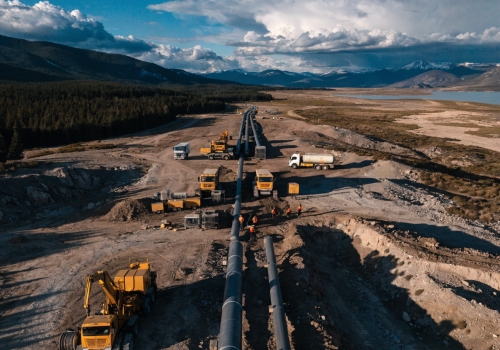
These areas include high-altitude cold zones. They also include densely populated cities. The JCOE method makes these pipes incredibly reliable. The mechanical expansion step removes internal stress. This prevents cracks under high pressure. I have 18 years of experience supplying these pipes. I see how much my clients care about quality. Centerway Steel provides one-stop pipeline services. We export our products to over 100 countries. Our JCOE pipes support major projects in Australia, Europe, and Africa. We serve many Fortune 500 oil and EPC companies. These companies include CNPC, Shell, and Samsung. We hold ISO 9001 and CE certifications. Our products pass SGS and TUV tests. This global reach proves the success of the JCOE process. We always put the customer first. We pursue a win-win cooperation with every client.
Project Type
Environment
Why JCOE is chosen
Oil and Gas Pipelines
Cold areas and seabeds
High strength and safety
Urban Networks
Densely populated cities
Strict leak prevention
Port Construction
Coastal areas
Flexible sizes for piling
Water Transport
Long distances
Perfect roundness and joints
The JCOE method revolutionized LSAW pipe production in the late 20th century. It offers great flexibility and strength. I hope this history helps you source the best pipes.











 English