

Are you struggling to decide which welded pipe fits your construction project? Choosing the wrong type risks safety and budget, but I can help you select the perfect solution today. A straight seam steel pipe (LSAW or ERW) offers higher production efficiency and superior pressure resistance for critical applications. In contrast, spiral pipes (SSAW) are cost-effective for large-diameter, low-pressure transport. Your choice depends on the balance between pressure requirements, diameter size, and project budget.
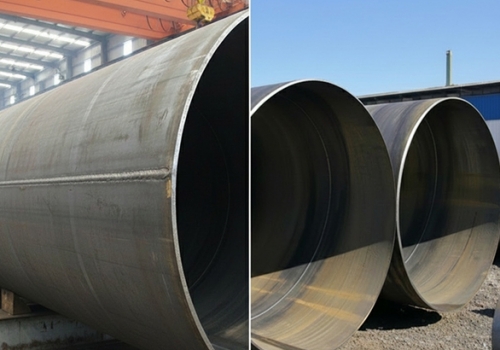
Many purchasing managers I meet in Germany face this exact dilemma. I want to share my eighteen years of experience in the steel industry to make your job easier. Let us look closer at the details so you can buy with confidence.
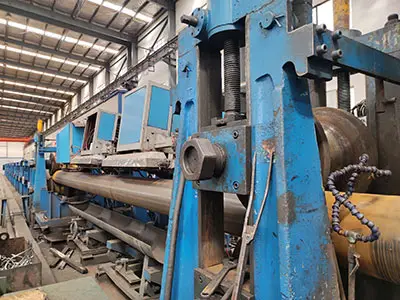
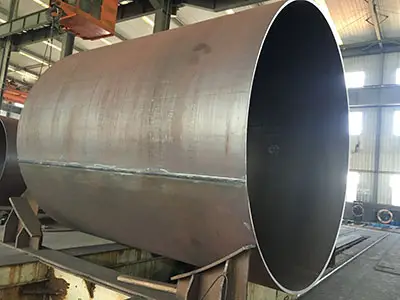
You might wonder how we make these pipes. Understanding the method reveals the quality differences and helps you avoid future defects. The production of straight seam steel pipe uses high-frequency welding or submerged arc welding. This simple, direct process results in fewer defects and higher efficiency compared to the complex spiral method.
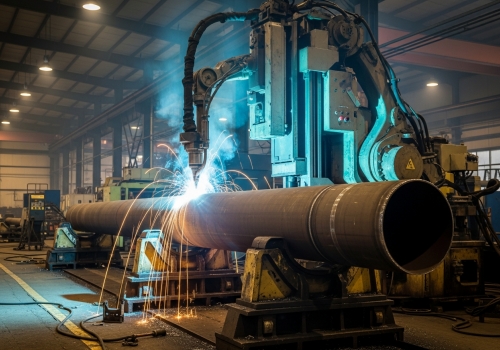
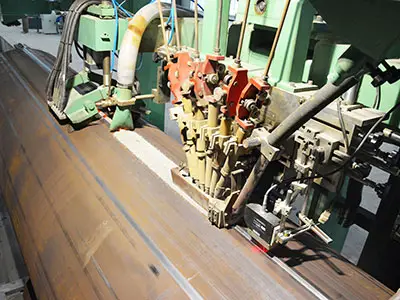
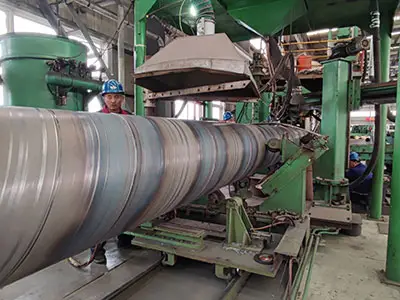
When I visit our production bases at Centerway Steel, I always look at the welding line first. The process determines the quality. For a straight seam steel pipe, the process is quite simple. We usually use High-Frequency Welding (ERW) or Longitudinal Submerged Arc Welding (LSAW). Because the process is short and direct, we can produce these pipes very fast. This high efficiency helps us keep costs down for you. However, spiral steel pipes are different. We make them by rolling a steel strip into a spiral shape. This allows us to make very wide pipes from narrow steel strips. This is a clever method, but it has a downside. The weld seam on a spiral pipe is much longer. It is usually 30% to 100% longer than a straight seam pipe of the same length. A longer weld means a higher chance of defects. In the industry, we sometimes see T-shaped welds in large straight seam pipes. This happens when short sections are spliced together. This can cause stress and cracks. At Centerway, we strictly control this to meet ISO 9001 standards. We ensure the welding residual stress is low. Here is a simple comparison of the manufacturing aspects:
| Feature | Straight Seam Steel Pipe | Spiral Steel Pipe |
|---|---|---|
| Raw Material | Steel Plate | Steel Coil |
| Weld Length | Short (Direct) | Long (Spiral) |
| Production Speed | Fast | Slow |
| Defect Risk | Lower | Higher (due to weld length) |
| Main Technology | LSAW / ERW | SSAW |
Safety is your top priority in construction. You need to know which pipe handles pressure best to prevent leaks or bursts. Generally, a straight seam steel pipe handles high internal pressure better due to the shorter weld length. However, spiral pipes offer mechanical flexibility and are better for large-diameter, lower-pressure needs.
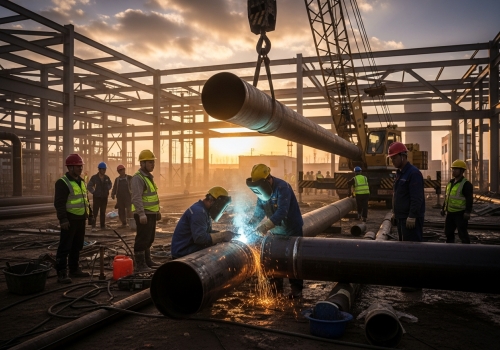
Strength is the most critical factor for my clients in the oil and gas sector. When a pipeline carries oil, it faces huge internal pressure. This pressure creates stress on the pipe wall. There are two main types of stress: radial stress and axial stress. Because of the weld geometry, spiral pipes distribute this stress differently. The spiral weld avoids the point of maximum stress. This sounds good, right? It helps prevent the pipe from bursting easily. However, the straight seam steel pipe is often preferred for high-pressure lines for a different reason. The issue lies in the welding process specification. Every weld has a start point and a stop point (arc ignition and extinction). These points are where defects often hide. Spiral pipes have a continuous weld, but straight seam pipes might have issues at the ends if not made correctly. However, for structural strength, straight seam pipes are often superior. They usually use higher-grade steel plates. Also, because the weld is shorter, there is less area for corrosion or failure over time. I have supplied pipes to Chevron and Shell. They demand high precision. Straight seam pipes can meet these strict requirements for heavy thickness and high strength. If your project involves high-pressure transport or critical load-bearing piling, the straight seam is usually the safer choice.
| Performance Metric | Straight Seam Steel Pipe | Spiral Steel Pipe |
|---|---|---|
| Pressure Resistance | High | Medium |
| Diameter Flexibility | Limited by plate width | Very Flexible |
| Structural Stability | Excellent | Good |
| Typical Application | Oil/Gas, High Pressure, Piling | Water, Sewage, Low Pressure |
You must save money for your company. But low price cannot mean low quality, so we must analyze the total cost. While straight seam steel pipe production is efficient, the raw material (wide plates) can be costlier. Spiral pipes use narrower coils to make big pipes, often lowering material costs for large projects.
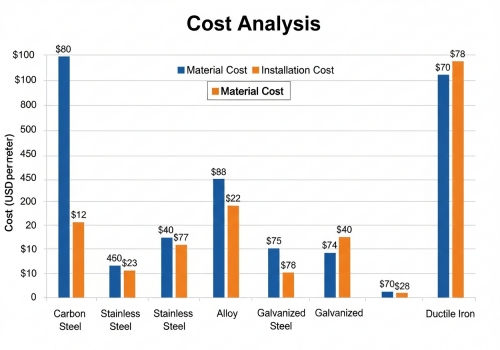
Cost is always a big discussion when I talk to EPC companies. You have a budget to keep. So, is straight seam steel pipe always the right buy? Not always. It depends on the size you need. If you need a very large diameter pipe, say over 1000mm, straight seam pipes become expensive. This is because we need very wide steel plates to make them. Wide steel plates are hard to produce and cost more. In this case, spiral pipe is the winner. We can use a narrow, cheap steel coil to make a huge pipe. It is like wrapping a ribbon around a tube. This saves a lot of money on raw materials. However, for smaller diameters (under 500mm), the straight seam pipe is often cheaper. The production speed is very fast. We can make many kilometers of pipe in a single day. This lowers the labor and machine cost per unit. Also, think about inspection costs. Spiral pipes have long welds. To ensure quality, you need to test the whole length of the weld using X-ray or ultrasound. Testing a long spiral weld takes more time and money than testing a short straight seam. At Centerway, we provide one-stop service. We help you balance the material cost against the inspection and risk costs. We want a win-win cooperation.
| Cost Factor | Straight Seam Steel Pipe | Spiral Steel Pipe |
|---|---|---|
| Raw Material Cost | Higher (for large sizes) | Lower (uses coils) |
| Inspection Cost | Lower (shorter weld) | Higher (longer weld) |
| Maintenance Cost | Lower | Moderate |
| Best Value For | Small/Medium sizes, High Pressure | Large sizes, Low Pressure |
In summary, choose straight seam steel pipe for high-pressure, critical projects, and choose spiral pipe for large-diameter, budget-conscious needs. Centerway Steel supplies both globally.











 English